




At Pongwe Bay Resort, luxury is defined as a return to balance — a state of physical and mental wellbeing achieved in harmony with nature. Located on the unspoiled east coast of Zanzibar, the resort offers a peaceful retreat designed to reconnect guests with the natural rhythms of island life.
Sustainability
Eco-luxury Resort in harmony with nature and local communities
Wellbeing through nature, design and barefoot living
Our Eco-Luxury Philosophy
The resort was designed by Italian architects and built by local craftsmen using natural and sustainable materials. Custom furnishings are handcrafted from precious African woods such as Mninga and Mtondoro, while floors and pathways feature natural materials including wood and Galana stone from Mount Kilimanjaro.

From Egyptian cotton linens to natural ventilation and minimal light pollution, every element contributes to deep relaxation and restorative sleep. The lush tropical gardens host small wildlife and exotic birds, while the pristine coral sand beach remains cool and soft even under the tropical sun.
Inspired by a philosophy of reconnection with the earth, the entire property is designed to be experienced barefoot. Soft coral sand paths run throughout the resort, and natural surfaces are used in all indoor and outdoor spaces — even in the restaurant and at The Club on the jetty.
A positive impact beyond the resort
Supporting Local Communities
Pongwe Bay Resort is committed to supporting the local economy by collaborating with small community initiatives across Zanzibar, including fishermen’s cooperatives, artisans and social projects.
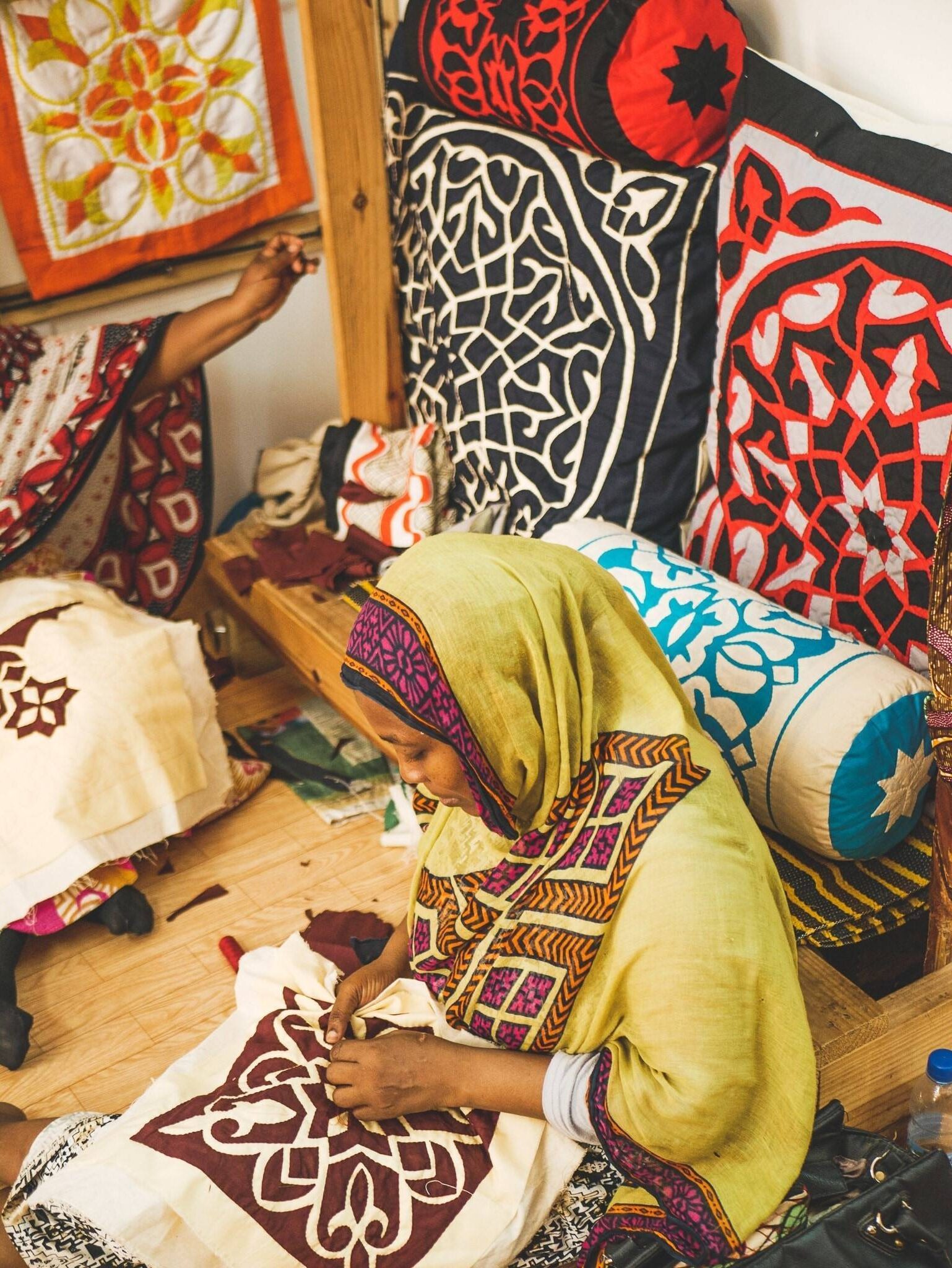
One of the most meaningful partnerships is with Sasik, a women’s cooperative that produces the beautiful Swahili-pattern cushions displayed throughout the resort. The cooperative provides employment opportunities for women — especially single mothers and women from rural areas — helping them improve their quality of life while preserving traditional craftsmanship.
Their appliqué textiles are handmade in Stone Town using recycled fabrics and cotton sourced from mainland Tanzania, inspired by Arabic, Swahili and Bedouin decorative traditions.
More than forty women contribute to the project, which also promotes education and environmental awareness within the community.